The Wet-Weather Syllabus: A Family Science Stroll Through Kings Heath Park
Photo: Unknown authorUnknown author, Public domain, via Wikimedia Commons
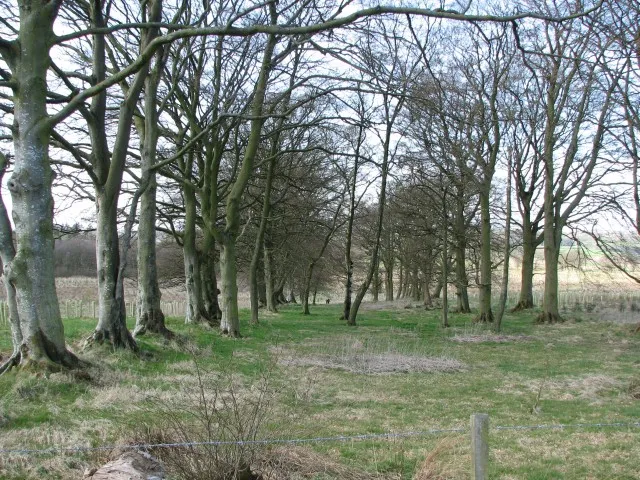
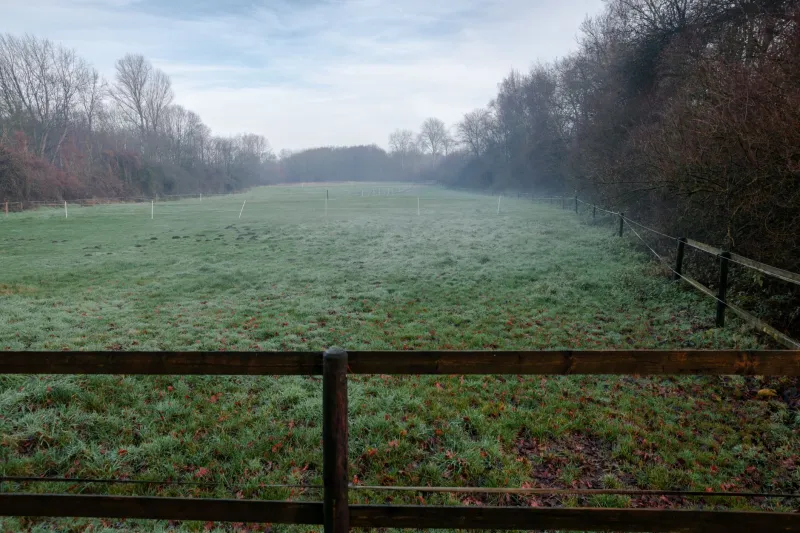
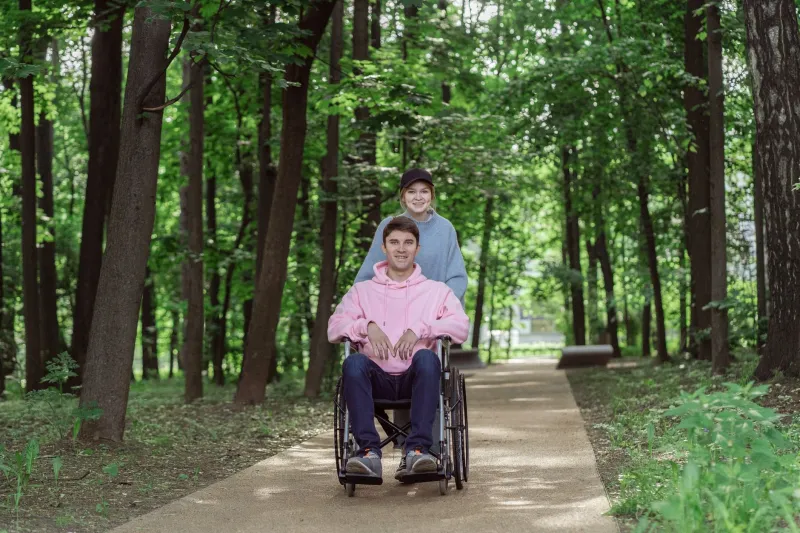
Kings Heath Park in the rain is not a washed-out version of the sunshine park. It is a different place entirely: paths turn dark and glossy, leaves stick to benches, and puddles appear in the hollows like temporary ponds. For a curious child, that is not a problem to solve. It is a laboratory that has just been set up for them.
This is a gentle, low-kit science trail for wet autumn and winter days. It takes about an hour at child pace, covers a short stretch of the park, and asks for no special equipment beyond what most families already have in the hallway. The aim is not to produce a polished experiment. It is to help children look closely, ask a question, and come home muddy but thinking.
First, the kit (and what to leave at home)
Pack light. Wellies and waterproof coats are the main event. Add spare socks, a small towel, a pencil, a ruler, a piece of string, a clear lidded jar, a clipboard or hardback book, hand sanitiser, a bag for wet things, and a thermos for the grown-ups. A phone timer is useful if you want to add a bit of measuring without turning the walk into a maths test.
Leave at home: glass, nets, anything you might use to dam or divert water, and any expectation of keeping what you find. The park is the specimen. We are only taking notes.
The route: three stops, no rush
Start at the main entrance and stay on the wide paths. The point is not to cover ground; it is to find three good puddles and a bench. Choose puddles on tarmac or compacted paths rather than grass verges or flowerbeds, where feet do more damage. Stop one is the first decent puddle you meet. Stop two is a bench with a view of trees. Stop three is a shallow puddle with fallen leaves nearby. If you pass the pond, treat it as a look-only stop from the path. There is plenty to see without getting close to the edge.
Safety and park etiquette
A puddle is a habitat, not a toy, and a wet park needs a bit of common sense. Supervise children closely, especially near deeper water or the pond. Keep to the path, watch for cyclists, and make sure everyone is visible if the light is grey. Nobody should taste puddle water or put wet hands near their mouth. Wash hands before snacks, even if the snack is just a biscuit in the car park.
Do not pull leaves from trees, move stones, dam a flow, or stir up mud. Collect only fallen leaves from the ground, and put them back when you have finished. If a puddle is deep enough to swallow a wellie, it is deep enough to leave alone. The best rainy-day scientists are careful ones.
Experiment one: the puddle depth map
At stop one, ask your child to choose three points across the puddle: near the edge, halfway in, and near the middle. Use a stick as a dipstick. Push it gently down until it touches the bottom, mark the water line with a thumb, then measure from the bottom of the stick to the mark with a ruler. Write the numbers down, even if they are rough.
Then ask the big question: where is the puddle deepest, and why might that be? Is the ground lower there? Is it closer to a drain? Does the shape of the path tell a story? Draw a simple cross-section of the puddle in the notebook, with the measurements labelled. This is real fieldwork, just with smaller waterproofs.
Experiment two: the leaf float test
At stop two, gather a handful of fallen leaves from the ground. Try to find different kinds: broad, narrow, fresh, crispy, dark, pale. Before testing, ask your child to predict which will float and which might sink. Then place each leaf gently on the shallow puddle and watch for thirty seconds. Retrieve it with a stick, not a hand, and return it to the ground afterwards.
Talk about what happens. Does a dry leaf float differently from a soggy one? Does the shape make a difference? A leaf that sinks is not a failed experiment; it is a result. The notebook line might read: 'Crispy oak leaf floated, then sank. Wet sycamore stayed up.' That is exactly the kind of sentence a scientist would recognise.
Experiment three: the drift test
At stop three, find a shallow puddle with a bit of surface movement. Place a small fallen leaf on the water and watch which way it drifts. Is it moving because of the wind, the slope of the ground, or something else? Use the phone timer to see how long it takes to travel between two fixed points, such as two twigs laid on the path beside the puddle. Do not build, dig, or redirect anything; just observe.
If there is no movement, that is a finding too. Ask why. Is the puddle level? Is it sheltered by a hedge? Has the rain stopped? Children are very good at noticing the small conditions adults stride past.
Make it a notebook page
At the bench, give each child a page with three headings: What we measured, What we noticed, What we wonder. Under the last heading, write down one question to take home. 'Why do some puddles have bubbles?' 'Where does the water go when it disappears?' 'Do leaves float better in cold water?' You do not need to answer them today. The point is to leave with a question still fizzing.
If the weather turns
If the rain becomes heavy, shorten the route to one puddle and one bench. If it turns icy, look at the shapes in the ice from the path and leave the surface alone. If the wind picks up, move to a more sheltered path and save the notebook for home. A wet-weather science walk should feel like an adventure, not a endurance test. The park will still be there next week.
The real result
The best outcome of this trail is not a perfectly completed worksheet. It is a child who stops at a puddle on the way home and says, 'I wonder how deep that one is.' Kings Heath Park does not need sunshine to be a classroom. Sometimes the rain does the teaching, and all we have to do is bring the wellies and pay attention.