Round the Outside: The Boundary Walk That Shows You a Different Kings Heath Park
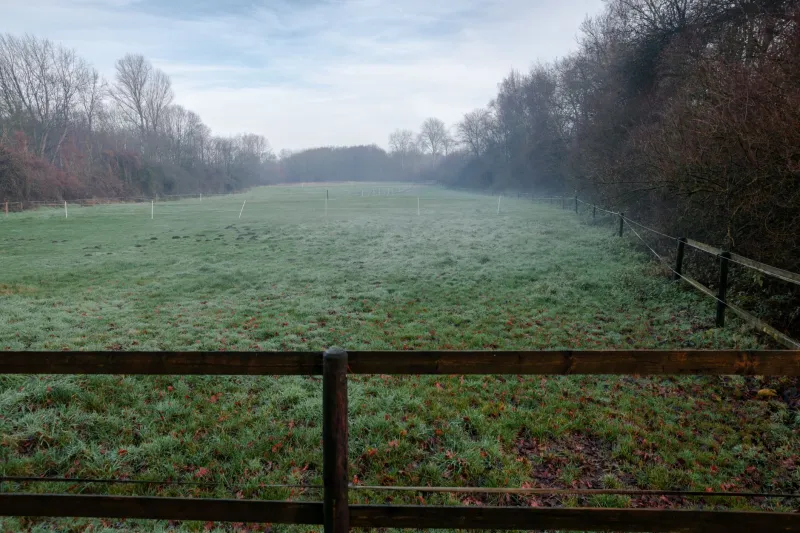
There are two ways to know a park. You can learn its middle, which is what most of us do: the path from the gate to the play area, the shortcut past the bowling green, the bench you always sit on. Or you can learn its edge, which is slower, stranger and, frankly, more interesting.
This is a walk that ignores the paths. Instead, you trace the park's boundary all the way around, in one go, and see what lives there.
Why the edge is the best bit
Ecologists have a name for this: the edge effect. Where two different habitats meet, hedgerow against mown grass, garden fence against open lawn, you get a sudden concentration of life. Light behaves differently, shelter changes, seeds blow in from one side and insects wander over from the other.
That means the boundary strip is often busier than the middle. It is where blackbirds rummage, where the first blackthorn blossom appears, where fox paths thread under gaps in fencing, and where the park quietly negotiates with the streets around it. Walking the perimeter is basically reading that negotiation at walking pace.
It also reframes the place. From the inside, Kings Heath Park is a green rectangle you use. From the edge, it becomes a piece of the neighbourhood with a seam all the way round.
Before you set off
Allow 45 to 60 minutes for a full circuit if you are actually looking at things, rather than marching. Wear something you do not mind getting muddy at the ankles; boundary paths are rarely the dry ones. Some stretches run along pavement rather than inside the park, so keep an eye on traffic and keep dogs close on the road-facing sections.
Best done in daylight. Mid-morning on a weekday is quietest, and any dry-ish morning in 2026 will do nicely.
The route, stage by stage
Start at the main gate on Vicarage Road and instead of heading inwards, turn left and follow the hedge.
Stage one: the roadside hedge. This is your longest straight. Look at the base of the hedge rather than the top: litter, leaf litter, and the small tunnels where animals pass through. Notice how the hedge is trimmed square on the street side and shaggy on the park side. That difference alone tells you a lot about who uses which side.
Stage two: the gap. Somewhere along the first stretch you will find a pedestrian opening, a squeeze stile of a thing, worn smooth at the edges. Stand in it for a moment. You are standing exactly on the line between park and neighbourhood, which is the whole point of the walk.
Stage three: the corner. Corners of parks are almost always neglected and almost always worth a look. Bramble, elder, a bit of fly-tipping, a lot of birdsong. This is where the generalists thrive.
Stage four: the back-street stretch. Here the boundary gives you something the interior never can: roofscapes, chimneys, washing lines, a glimpse of how the park sits inside the streets that grew up around it. The park was laid out as this suburb filled in during the early twentieth century, and the brickwork on the boundary, garden walls meeting park railings, is a reminder of that.
Stage five: gates and gateposts. Count them as you go. Some are the proper municipal sort, some are gaps people have made, some are service gates for mowers. Each one is a small decision about who gets in and how.
Stage six: back to the start. Coming up on the main gate from the outside is genuinely odd, like seeing your own front room through the window. Notice the lodge, the railings, the way the park announces itself to the road.
Prompts to take with you
- Find three different materials in the boundary: hedge, railing, wall. Which is oldest, do you think?
- Count the gates. How many are for people, how many for vehicles?
- Look for a spot where the park's grass grows taller right against the fence. Why there?
- Find evidence of animals crossing the boundary, and no, a crisp packet does not count.
- Spot one thing on the outside you would never see from inside the park.
- Listen at a corner. Is it louder or quieter than the middle?
- Note where the hedge has been laid or coppiced. That is management, and management means someone cares.
- Find your favourite five metres of the whole circuit. Everyone has one.
Doing it properly in 2026
There is no season when this walk is bad, but it does change character. In winter the hedges are bare and you can see the structure of the boundary, the layers of growth, the old fencing buried inside. In spring the blackthorn and hawthorn do their thing and the edge turns white before the middle of the park catches up. Late summer gives you berries and the slightly chaotic energy of a hedge full of fledglings. Autumn is arguably the best, when the boundary collects leaves from both sides.
Whichever day you pick, resist the urge to cut across. The whole value of this walk is that it commits you to the outside lane, to the bits of the park you have walked past a thousand times without ever walking along.
A few gentle rules of the edge
Do not climb fences or squeeze through gaps that look structural rather than social. Close gates behind you. Keep dogs on a lead where the boundary meets the road, for everyone's sake. And remember that on the outside stretches you are, quite literally, in someone's neighbourhood, so no peering into windows or photographing front doors.
The park belongs to the people around it. Walking the perimeter is just a way of saying hello to that idea, one hedge at a time.