The Oldest Things in the Park: A Victorian History Walk Through Kings Heath Park
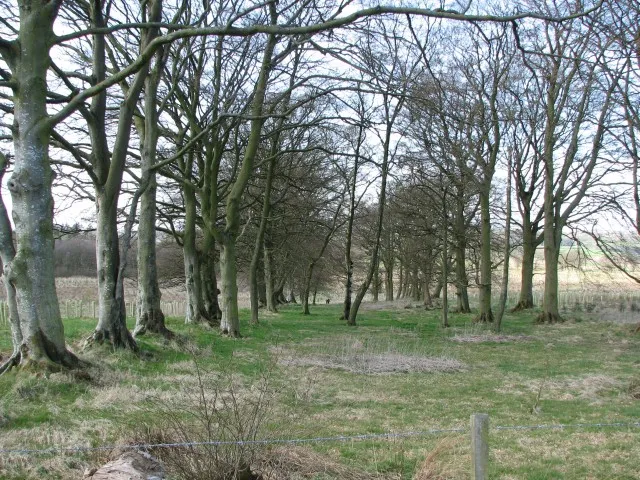
Photo: Callum Black, CC BY-SA 2.0, via Wikimedia Commons
You almost certainly know which gate to use. You know where the bins are, which bench catches the afternoon sun, and roughly how long it takes a five-year-old to cover the ground between the entrance and the swings. What you may not know is that the gate, the bench and the path under your feet are the top layer of a much longer story — one that starts with a very Victorian set of ideas about what a park was actually for.
Kings Heath Park belongs to the great wave of public parks that reshaped British towns and cities in the later nineteenth and early twentieth centuries. Birmingham was unusually invested in the idea. As the town swelled into a city, the corporation and its committees went looking for open ground, often buying up the grounds of private houses on the edge of built-up areas and throwing the gates open to everybody. Kings Heath, still carrying its village shape on the Alcester Road, was exactly the sort of place where that logic applied.
The exact sequence of who owned which field is a job for the archives rather than a stroll. But you don't need a certificate to start reading the landscape. The clues are already there, hiding in plain sight.
Start at the edge, not the middle
Most of us walk into a park and immediately head for the thing we came for. Try the opposite. Begin at the boundary and look at it properly.
Old park walls and railings are rarely decorative afterthoughts. Brickwork that has weathered into soft orange, stone copings, and gate piers with a bit of weight to them tend to survive from an earlier arrangement of the land — often the wall of a private estate rather than a purpose-built municipal boundary. Look at the line of the wall where it kinks or thickens. Those changes are usually where one property ended and another began, or where a later entrance was punched through.
Gate piers are worth a slow look too. A capped pier with a bit of moulding on it was expensive in its day, and nobody spends money on a gate they expect to be climbed over by the local children. Somewhere beneath the modern signage is a statement about who was welcome, and the answer changed dramatically when the public got the keys.
The trees are the oldest residents
The mature specimens are the park's genuine elders, and they are also its most generous historical evidence. Victorians planted with intent — in avenues, in clumps, in deliberate pairs framing a view. When you see trees in a straight line that the paths no longer follow, you are usually looking at a planting scheme older than the route beneath your feet.
Look, too, for trees that are conspicuously older than everything around them. A single enormous specimen standing slightly apart from its neighbours often marks the site of a former lawn, a drive, or a boundary that has since dissolved. Estate planting frequently outlived the estate itself; the house went, the cedar stayed.
It is worth pausing on the sheer patience of it. Whoever put those saplings in the ground knew perfectly well they would never sit in the shade they were creating. Parks are one of the few things we still build for strangers who haven't been born yet.
Paths that curve for a reason
Follow the main path and notice how rarely it takes the shortest route. Victorian and Edwardian park design loved a sweep. A curve keeps a view opening up in front of you, encourages a slower pace, and turns a walk into a promenade rather than a transaction.
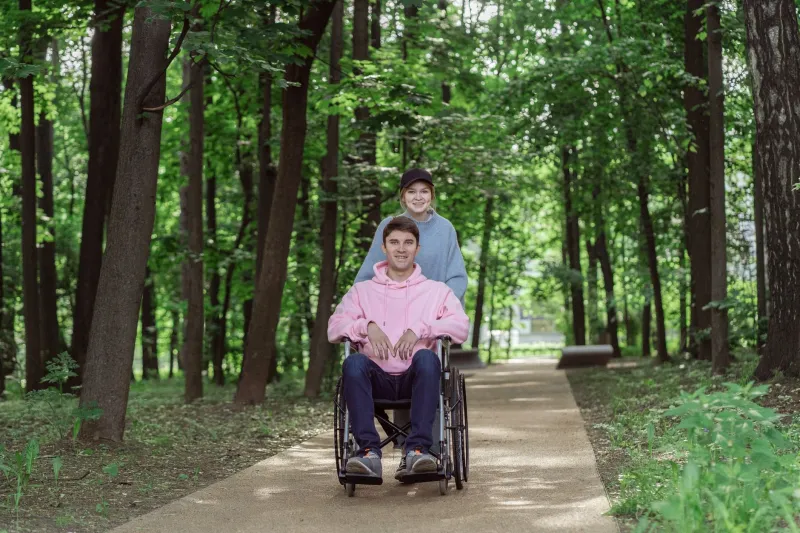
That design habit has left us with something genuinely useful. Generous path widths — originally intended for respectable Sunday strolling in good coats — now accommodate prams, wheelchairs, scooters, dog leads and two friends walking side by side without stepping into the border. The Victorians built for a parade; we got an accessible circulation route for free.
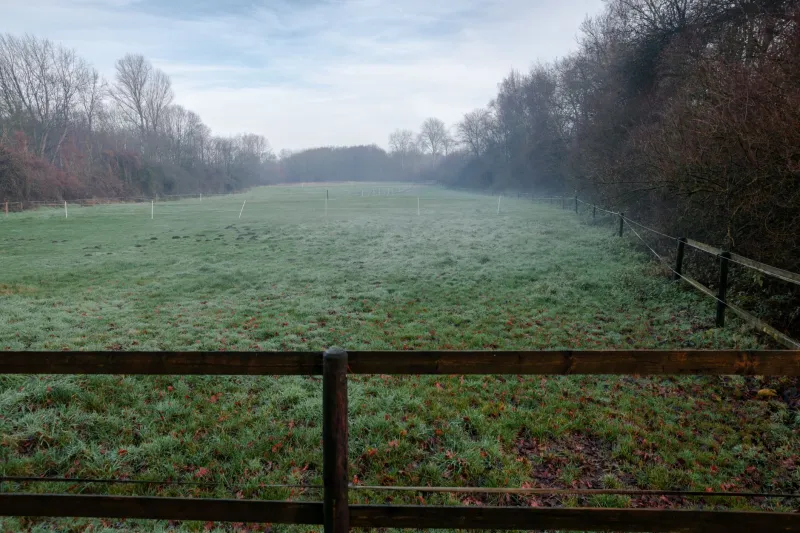
Sightlines matter as well. Stand at one end of an open lawn and see what you can spot at the other. The long, clear view is not an accident: open grass was meant to be looked across, to let people see and be seen, and to give a sense of air in a smoky town.
A park with a job to do
It is easy to smile at Victorian earnestness, but the public parks movement was, at heart, a public health project. Campaigners argued that working people needed somewhere to breathe clean air, take exercise and find harmless recreation that kept them out of the pub. Parks were pitched as a cure for overcrowding, poor sanitation and cheap gin.
That is why so many older parks have a broad lawn for games, a formal area for band music, and paths wide enough to hold a crowd on a bank holiday. The Victorians believed the layout itself could nudge behaviour — that a well-kept garden would encourage well-kept habits.
You can still see the descendants of that thinking in a park's calendar today: the summer events on the grass, the community gatherings, the school sports days. We have swapped the brass band for a sound system and the temperance lecture for a coffee van, but the underlying premise holds. Shared open space does something for a neighbourhood that nothing else quite manages.
Reading it for yourself
If you fancy turning this into a proper afternoon, do a little homework first. Old Ordnance Survey maps from the late nineteenth and early twentieth centuries are widely reproduced and easy to find, and laying one beside a modern map on your phone is genuinely startling the first time you do it. Watch for field boundaries that became paths, drives that became avenues, and buildings that vanished without trace.
Tithe maps, local archive photographs and the collections at the Library of Birmingham will fill in the gaps, and local history groups are usually delighted to be asked. Then walk the park with a question in mind rather than a route. Where did the entrance used to be? Why does this path bend? Who planted this row?
What the past is good for
History walks can feel like homework. This one isn't meant to be. The point is that knowing why the park looks the way it does changes how it feels to be in it — the bench becomes a small piece of civic optimism, the wide path becomes a gift from people in stiff collars, the old tree becomes a neighbour who has been watching the place for over a century.
So next time you're heading for the swings, walk in the long way round. Look up at the canopy, run a hand along the wall, follow the curve instead of cutting the corner. The park was here before the playground, and it is still quietly explaining itself to anyone who slows down enough to listen.