Look Up, Listen In: A Ten-Minute Birdwatch for Absolute Beginners at Kings Heath Park
Birdwatching has a reputation for being a hobby that requires equipment, patience and perhaps a waterproof notebook with a little elastic band around it. At Kings Heath Park, it can be much simpler than that. You can stand still for a few minutes, look up, listen properly and come away having noticed something you would otherwise have walked straight past.
The ten-minute twitcher approach is exactly what it sounds like: a short, gentle birdwatch with no pressure to identify everything or cover the whole park. A phone notes app will do instead of a field notebook. Binoculars are welcome but entirely optional. The aim is not to become an expert before lunch; it is to tune in to the birds that already share this green space with us.
Start with the birds you already know
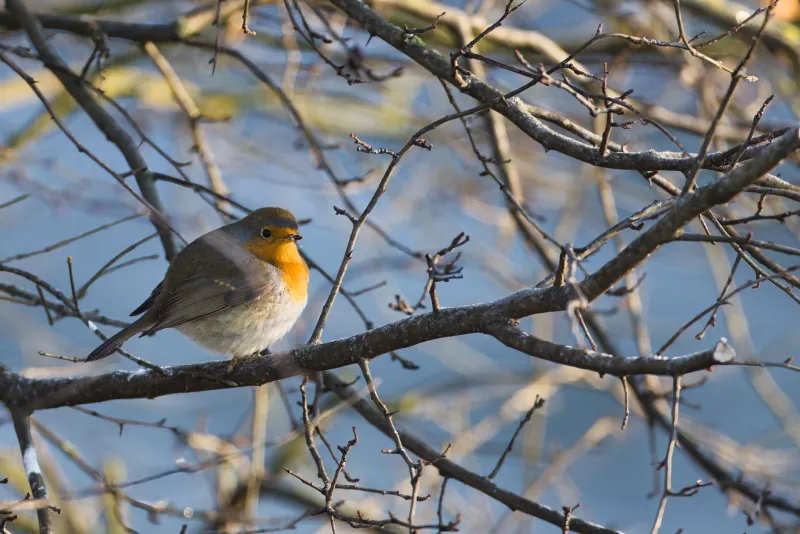
It is tempting to chase the unusual, but the everyday birds are a good place to begin. Woodpigeons are hard to miss, whether they are clattering up from the grass or sitting heavily in a tree like they have somewhere important to be. Magpies and carrion crows are easy to spot and easy to tell apart once you look at the tail and the shape. Blackbirds flick about near hedges and leaf litter, while robins often appear surprisingly close, watching you with that slightly managerial expression.
None of these are boring. A woodpigeon taking off is a proper event. A robin singing in winter is one of the park’s small pleasures. And once you have spent a few minutes really watching a common bird, you start noticing how it moves, what it does and where it likes to be. That is birdwatching, minus the ceremony.
The ten-minute format
Pick a spot and stay put for two minutes. Let your eyes settle. Look low, then mid-height, then up into the canopy. Listen as much as you look. After that, walk slowly for around five minutes — not striding, just ambling — and pause whenever something moves. Finish with three minutes of standing still again, noting down what you saw.
That is it. Ten minutes. You do not need to tour the whole park or tick off a list. In fact, the shorter format often works better because it stops the walk turning into a mission. A slow look at one tree line can be more rewarding than a rushed circuit of the whole site.
Three easy mini-routes
If you want a little structure, try one of these loose routes. First, the bench loop: find a bench with a view of trees or open grass, sit for a few minutes and watch what arrives. Benches are underrated birdwatching infrastructure.
Second, the playing-field edge: walk slowly along the boundary and scan the grass. Woodpigeons, crows and black-headed gulls may be feeding or loafing about, and a cold snap can bring winter thrushes into more open areas. Keep to the paths and give birds plenty of room.
Third, the tree-line shuffle: choose a stretch of trees or hedge and walk it slowly, stopping every so often. Blue tits, great tits, goldfinches and long-tailed tits may move through in small groups, especially where there are berries or seeds. You will often hear them before you see them — a thin, busy twittering from the branches.
What to look for in winter 2026
Winter is a genuinely good time for this kind of watching. With leaves off many trees, birds are easier to see, and the park can host visitors that are less obvious at other times of year. Redwings and fieldfares — winter thrushes from further north and east — may appear when the weather turns cold, often stripping berries or feeding on open ground. They are not guaranteed, which is part of the fun. A quiet ten minutes is still a good ten minutes even if the rarities stay away.
Resident birds are busy too. Robins sing to defend their winter territories, blackbirds turn over leaves, and mixed flocks of tits and finches work their way through the trees. Look for movement, listen for contact calls and resist the urge to chase. Standing still often brings better views than following a bird around.
Your phone notes app is enough
A simple note can be surprisingly satisfying. Try a template like: date, time, weather, where you stood, three birds noticed, one behaviour worth remembering. For example: cold, bright, near the tree line, woodpigeon, robin, blue tit; robin singing from a low branch; blue tits moving through the hedge.
That is enough. Over a few weeks, the notes start to tell a story. You might notice that robins are singing more, that the thrushes appeared after a frost, or that the same corner is reliably busy in the morning. Photos are fine too, but do not spend the whole ten minutes trying to get the perfect shot. The point is to watch, not to chase.
A few gentle rules
Keep your distance, especially from nests and feeding flocks. Do not use bird song playback to tempt birds closer. Avoid feeding bread to waterbirds or any wildlife, and take litter home or use the bins. If you have a dog, keep it under control around busy bird areas, and give wildlife space. Children make excellent birdwatchers when they are encouraged to point and whisper rather than run and shout — though a certain amount of running and shouting is also part of park life.
Make it a family ten
For families, give everyone a job: one spotter, one listener, one note-taker. Count the woodpigeons. Find three different birds. Listen for a call and try to copy it badly. A flask and a biscuit afterwards can round the whole thing off nicely. The beauty of ten minutes is that it fits around playground time, a dog walk or a quick errand.
A small invitation
Try it once this week. Stand still, look up, listen in and write down three things. You do not have to become a twitcher, and you certainly do not need the fancy binoculars. Kings Heath Park is already full of birds getting on with their day. A ten-minute look is all it takes to join them for a moment.