Bark First, Buds Second: A Twenty-Minute Winter Tree Trail in Kings Heath Park
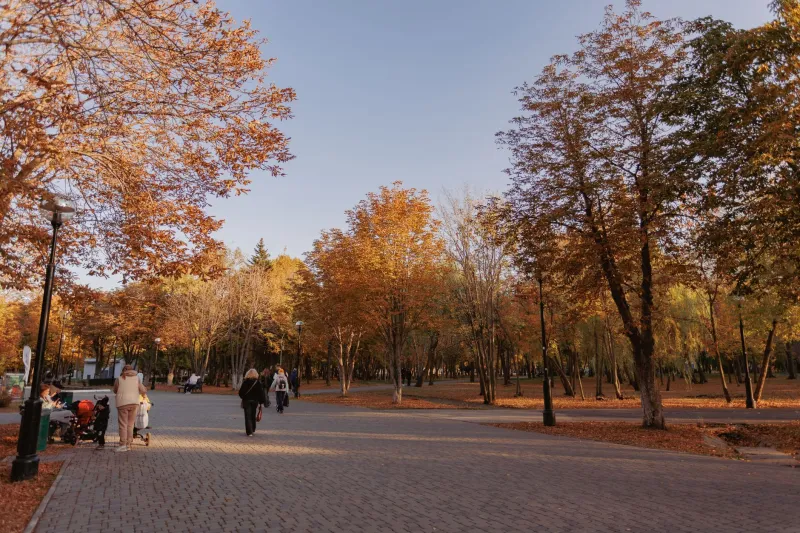
November in Kings Heath Park does something quietly brilliant to the trees. The leaves pack up, the sky turns the colour of an old dishcloth, and suddenly the wood is showing its workings. This is the season for reading trees, not just looking at them.
You do not need a botany degree, a fancy app or a thermos of coffee big enough to bathe in. You need a pair of shoes, twenty minutes and a willingness to look a bit closer than usual. This is a beginner's trail for the curious pootler, the school-run dawdler and anyone who has ever pointed at a tree and said, confidently, “that's an oak” while secretly hoping nobody asks follow-up questions.
Why the bare months are on your side
Leaf shape is the showy bit of tree identification. It is also the bit that vanishes. From late autumn into winter, Kings Heath Park hands you a different set of clues: bark, buds, twigs and the overall shape of the tree against the sky. These are the features that stay put.
There is another bonus. Once the leaves are gone, you can see how the branches are arranged. Some trees hold their buds and branches in pairs, directly opposite each other. Others alternate, with one bud or branch slightly above the other. Learning to spot that difference is like being let in on a small secret. It narrows things down fast.
Winter also makes you slow down. There is less colour to distract you, so the eye settles on texture instead. A rough, fissured trunk, a smooth grey limb, a fat sticky bud or a twig that zigzags like it has had one coffee too many — these are all easier to notice when the tree is not wearing a leafy coat.
What to look at first
Bark
Start low and work up. Bark is not always reliable on its own, especially on young trees, but it is a good opening question. Is it deeply cracked and rugged? Smooth and grey? Peeling in papery strips? Scaly in flaky plates?
Oak tends to look like it has been around since the dinosaurs and has the wrinkles to prove it. Beech often has smooth, silvery-grey bark that looks almost poured on. Birch is the obvious show-off, with white or creamy peeling bark, though younger trees can be less dramatic. Sycamore bark tends to be scaly and patchy as it ages.
Buds
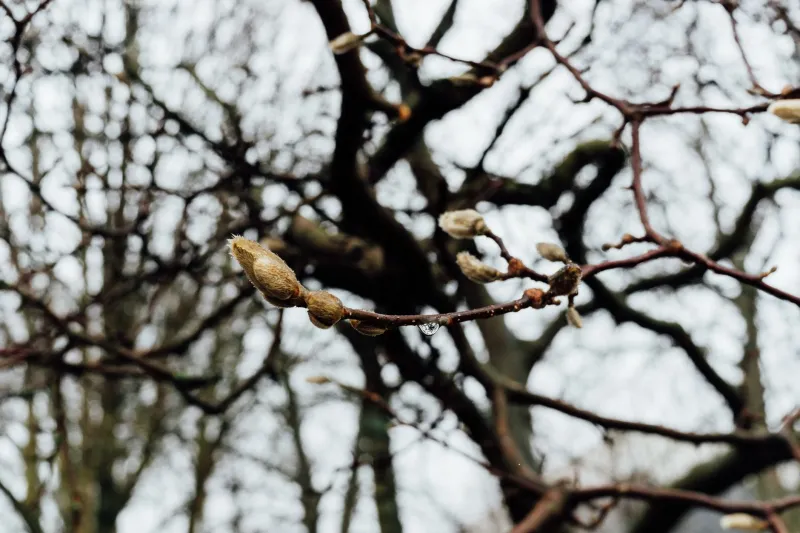
This is where winter tree-spotting gets genuinely fun. Buds are the tree's spring plans, already packed and waiting. Look at colour, size and stickiness.
Ash has bold, black buds arranged opposite each other on stout twigs. Horse chestnut has big, sticky brown buds, also opposite, with a leaf scar below that can look like a horseshoe. Beech buds are long, pointed and chestnut-brown, set alternately along the twig. Lime buds are often reddish and neat, while oak buds cluster towards the tip of the twig and can look like a tiny crowd queuing for a bus.
Do not worry if you get it wrong. Tree identification is a hobby built on cheerful uncertainty. The point is to notice more this week than you did last week.
Branch pattern and silhouette
Step back and squint. What shape is the tree making against the grey? A broad, rounded dome? A stiff, upright broom? A slightly chaotic tangle?
Oak often has a wide, knobbly, spreading crown. Ash has a more upstanding, domed shape when bare. Lime can look dense and rounded, with a haze of fine twigs. Birch has a lighter, airier silhouette, with slender branches that seem to droop at the ends. None of these are cast-iron rules, but they are useful prompts.
A gentle twenty-minute loop
Start near the main entrance and take a wide path into the park. You are not marching; you are on a tree trail, which is the official excuse for stopping every few metres and staring upwards like a detective in a raincoat.
First stop: find a mature tree with rough, ridged bark. Look at the trunk, then follow one low branch out to its twigs. Are the buds opposite or alternate? Are they clustered at the tips? If the bark is rugged and the buds are crowded near the end of the twig, you are probably in oak territory.
Second stop: look for smooth grey bark and long pointed buds. This could be beech. Check the twigs. Beech buds are arranged alternately and look like small, sharp pencils. If the bark is smooth but the buds are sticky and large, look again — you may have found a horse chestnut instead.
Third stop: find a tree with opposite branching. This is easier to see in winter than at any other time. Look for a twig where two buds sit directly across from each other, like a tiny pair of ears. Ash has famously black buds. Sycamore has greenish buds and often scaly bark. Once you have seen opposite branching, you will start spotting it everywhere.
Fourth stop: pick a tree with a distinctive silhouette. Stand back, look up and trace the outline with your finger. Is it round, spiky, drooping or upright? Compare it with the next tree along. This is not about naming it immediately. It is about building a mental album of shapes.
Final stop: look down. Winter is not just overhead. Fallen leaves, seed cases and old catkins can give you clues about what was growing there in summer. A spiky horse chestnut case, a cluster of ash keys or a few brown oak leaves underfoot are all part of the story.
Your pocket checklist
Screenshot this bit, or scribble it on the back of a shopping list.
- Bark: rough, smooth, peeling, scaly or ridged?
- Twigs: are the buds opposite each other, or alternate?
- Buds: what colour, size and texture? Sticky, pointed, black, red, clustered?
- Silhouette: round, spreading, upright, drooping or tangled?
- Ground clues: fallen leaves, seed cases, catkins or old twigs?
- One photo: take a picture of the bark, a twig and the whole tree. Three shots, no pressure.
A small note on getting it wrong
The park is not an exam hall. If you call a lime an oak and nobody faints, you have lost nothing. Winter tree-spotting is really just a way of paying attention. It gives a grey November afternoon a bit of shape and gives your eyes somewhere interesting to land.
And if you come back next week and the same tree has the same bark, the same buds and the same quiet silhouette, you will start to recognise it. That is how a park stops being a backdrop and starts becoming a place you know.
So next time you are in Kings Heath Park, leave the headphones in your pocket for ten minutes. Look up. Read the bare bones of the thing. The trees are telling you exactly what they are.