Low Volume, High Comfort: A Calmer Route Into Kings Heath Park

Photo: PattayaPatrol, CC BY-SA 4.0, via Wikimedia Commons
A park is a lot of things at once. Somewhere in the same hundred metres you'll find a playground at full pelt, a dog deciding another dog is its enemy, a mower, a skateboard, a birthday party and about four different songs playing from four different phones. Most of the time that's the charm of the place. On the wrong day, it's simply a lot.
This guide is for the families and visitors who feel that. Kids who cover their ears before they can explain why. Adults who need to know where the exit is before they can relax. Anyone who has done a U-turn at the gate and gone home feeling a bit rubbish about it. There's no trick to Kings Heath Park — it's just a question of which bit you use, and when.
The Clock Does Most of the Work
Before routes and benches, timing. The park has a rhythm and it's fairly predictable once you know it.
Weekday mornings, roughly 9.30 to 11, are the sweet spot. The school run has cleared, the toddler groups haven't fully landed, and the paths are mostly dog walkers and people with a flask. Early afternoons are usually calm too, right up until about 3pm when the park changes gear completely and belongs to the after-school crowd.
Saturdays are the busiest stretch of the week. Junior sport, organised runs, dog walkers and everyone who has been waiting all week for a dry morning all arrive at once. If a Saturday visit is unavoidable, aim for either very early — before eight — or that flat, slightly tired window after two o'clock.
Sundays tend to be gentler, and the hour before dusk in November is quietly wonderful: short, cold, barely anyone about, and the light doing something good through the bare trees. Bring a torch for the walk home.
Come In From the Side, Not the Front
Entrances matter more than they get credit for. The main gates drop you straight into the busiest part of the park, with the play area, the cafe and the general hubbub all in one go. That's a lot of input in the first thirty seconds.
Use a quieter entrance instead. The paths that come in off the surrounding residential streets tend to deliver you into the tree belt rather than the middle of everything, which gives you and whoever you're with a few minutes of walking to settle before you meet the noise. It also means the park feels like it gradually opens up rather than arriving all at once.
If you're driving, park on a quiet side street a few minutes away rather than fighting for the closest space to the playground. A short walk in is a buffer, and it makes leaving easier later.
A Loop That Skirts the Loud Bits
You can absolutely enjoy the park without ever going past the swings. Try this: pick up the perimeter path and walk it in whichever direction keeps the sun out of your eyes, letting the middle of the park stay in the middle.
Head along the tree line, where the path is wider and the sound is muffled by leaves and bark. Carry on round towards the open grassy edge, which is usually empty apart from the odd football. Keep the play area and the bandstand at a distance rather than cutting through them — the bandstand in particular acts as a natural amplifier, and on event days you'll hear it from a long way off.
That loop is about twenty minutes at a small person's pace, and it does the job: trees, sky, birds, a few dogs at a safe distance, and no crowds.
Benches Worth Aiming For
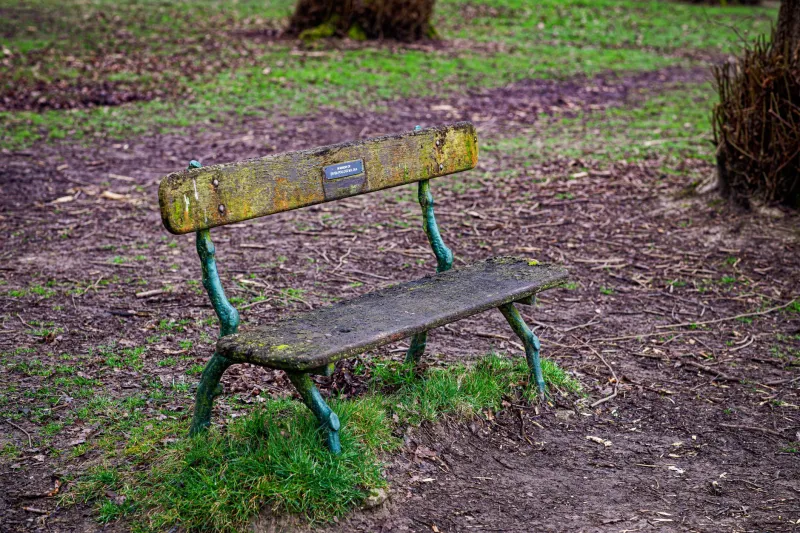
The best calm spot isn't the nicest bench — it's the bench with its back to the path. Sitting facing outwards means you can see everything coming, which is worth a lot if being approached from behind is the thing that ruins an afternoon.
Look for the seats tucked into the tree belt rather than the ones lined up along the main drag, and the ones at the far end of the grass where the park thins out. Mid-week, the bench nearest the quieter gate is usually free.
The Short Kit List
Nothing dramatic, but a small bag makes a big difference:
- Ear defenders or noise-cancelling headphones, even if you think you won't need them
- A drink and a snack with a predictable texture — hungry plus overstimulated is a bad combination
- Spare layers, because the park is always two degrees colder than the street
- A photo of the route on your phone, so the plan doesn't have to be explained twice
- A timer or a rough finishing time agreed out loud before you set off
- A charged phone and a rough idea of where the toilets are
Agree the Exit Before You Need It
If you're visiting with a child who finds busy places hard, work out the leaving plan on the way in, not on the way out. Something as simple as "we'll do the loop and then go" takes an enormous amount of pressure off, because there's nothing to negotiate later.
And if you get ten good minutes, that's ten good minutes. Leaving on a high is a genuine win, not a failure to stay longer.
If It All Gets a Bit Much
It happens. The mower starts, an ice cream van appears with its jingle, a dog barks right beside you. Head for the trees rather than the gate — the path along the boundary is almost always quieter than the route you came in on — and give it five minutes sitting down before deciding whether to go home.
Either answer is fine. The park isn't going anywhere, and neither is the bench with its back to the path.