Frost, Short Days and the Good Kind of Quiet: A Winter Guide to Kings Heath Park
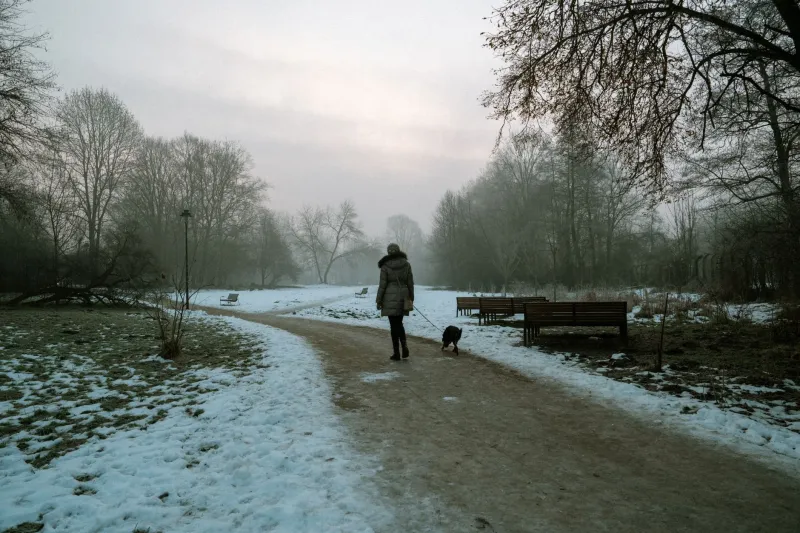
Winter gets a rough deal in Birmingham. It is easy to write off the park between November and March, to decide that the playground will be too cold and the paths too sloppy, and to promise yourself you will come back in spring. The truth is that Kings Heath Park in the cold months does something the summer crowds never quite see: it goes quiet, and quiet suits it.
This is our guide to visiting through the winter of 2026 — what to expect underfoot, when to bring a camera, what to wear and where to thaw out afterwards. None of it is complicated. All of it is worth knowing.
Frost first thing: what the park actually feels like
Arrive before nine on a clear, cold morning and you get the park at its best. The grass holds a hard white bloom, the path edges crunch, and the long shadows from the mature trees stretch right across the main lawn. Sound carries differently too — you can hear a dog barking from the far side of the field and a wood pigeon answering back.
It is genuinely cold, though, and the open stretches are exposed. The park has plenty of shelter along its tree-lined edges, but the middle is a wind tunnel on a bright, breezy January day. Plan your loop so the open section is on the way out and the sheltered path is on the way back.
Underfoot: the honest truth about paths and grass
Main paths are tarmac and are generally the safest option through the winter, but frost, wet leaves and a thin film of ice change that. The shaded stretches — particularly anywhere the trees close overhead and where the sun does not reach the ground until late morning — are the ones that catch people out. Take the corners slowly. If the pavement on your walk to the park is slippery, the park will be slippier.
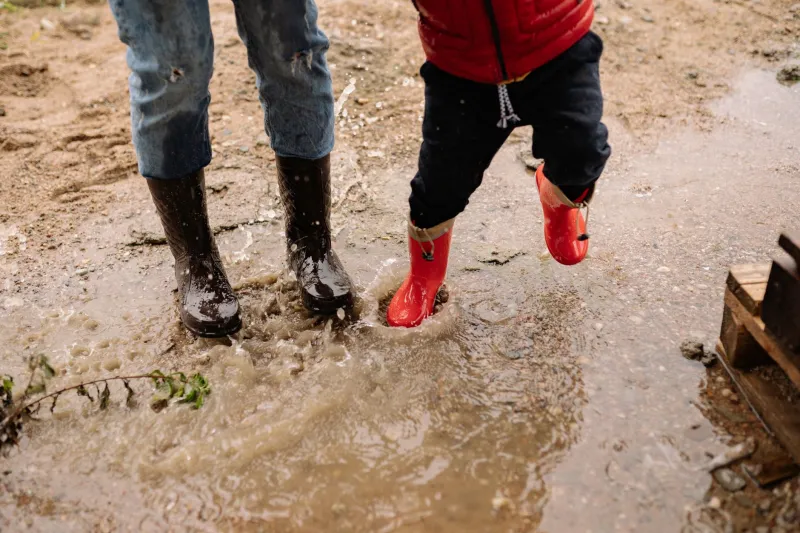
Grass is a different matter. In a wet winter it will be soft, and soft means muddy. If you are pushing a buggy or using a wheelchair or mobility scooter, stick to the hard paths and avoid the cut-throughs across the field, which can be churned up within days of heavy rain. Wellies for the children are not a fashion statement in January; they are practical equipment.
The park does not grit the way the roads are gritted, so do not expect a perfectly clear surface on the coldest mornings. Treat a frosty morning like a walk in the countryside, not a walk down the high street.
Dressing for it (and the item people always forget)
The single most underestimated piece of winter kit is not a coat. It is a hat that stays on. Children lose hats at a rate that defies physics, and a cold head ends a walk faster than cold hands.
Beyond that: layers you can shed rather than one thick coat, gloves for everyone including the adults, and footwear with actual tread. Spare socks in the car boot are worth their weight in gold if you have small children who find every puddle between the gate and the playground.
For early-morning walkers, a small torch or a phone light is not overkill in December, when sunrise does not properly arrive until well after eight.
Chasing the light: the best hours for photographs
The good light in winter is short and specific. There is a window in the morning, roughly between eight and ten, when low sun rakes across the frost and turns the edges of things gold. That is the hour for photos of the trees, the long shadows and anyone who will stand still for four seconds.
Late afternoon is the other window. Sunset comes early — around a quarter to four at the turn of the year — and the hour before it gives a soft, low light that flatters the park far more than the harsh overhead sun of July. If you want a photograph that looks like a proper winter postcard, aim for the last hour of daylight and point your camera away from the sun rather than into it.
Midday in December is not your friend. The light is flat, the shadows are short and everything looks grey. Save your phone battery.
Who is about in the cold
Wildlife spotting in winter is a different exercise. The noisy summer cast thins out and you get the year-round residents: wood pigeons, crows, magpies, robins that will follow you hopefully, and the occasional jay shrieking from the trees. Squirrels stay active and are noticeably bolder when the ground is hard.
Bare branches are an advantage, not a disappointment. Look up — winter is the one season when you can actually see what is in the canopy rather than guessing at rustling leaves. Long-tailed tits move through in chattering groups, and if you stand still for a minute near a hedgerow you will usually hear something before you see it.
The cold also brings in winter visiting birds, so a pair of binoculars in a coat pocket is genuinely worth carrying.
Warm-up stops that do not cost much
The café is the obvious anchor of a winter visit, and it earns its keep in January. A hot drink, a table by the window and somewhere to peel off wet gloves can rescue an outing that was heading for an early finish. Weekend mornings are busiest — if you want a seat, go earlier than you think you need to.
If the café is packed, treat the car as your warm-up stop. A flask in the boot and a five-minute sit with the heater on is not a failure of the day out; it is good planning. And the walk home, if you have one, is its own reward when the light is going and the streets are quiet.
Two minutes of checking before you set off
Events, closures and seasonal changes can shift at short notice in winter. Before you leave the house, check the park's website and social channels for anything that affects your plans — a cancelled weekend event, a temporary closure, a change to opening times for the café or the facilities. It takes two minutes and it saves the specific disappointment of arriving with three excited children to find the thing you came for is not happening.
It is also worth checking the weather for the actual hour you plan to be out, not the whole day. A dry forecast can hide a frost, and a grey forecast can hide a genuinely lovely morning.
The quiet season is a gift
Kings Heath Park in winter asks a little more of you: better shoes, an earlier alarm, a flask. In return it gives you space, a bit of hard-won peace, and the feeling of having your local park almost to yourself. Wrap up, check the forecast, and come and see what the cold version of the place looks like.